
Sporcle Party: Social Trivia
Sporcle, IncTrivia
4.294.00 Reviews
- Version
- 1.5.15
- Installs
- 5.00M
- Age Rating
- Everyone 10+
Screenshots
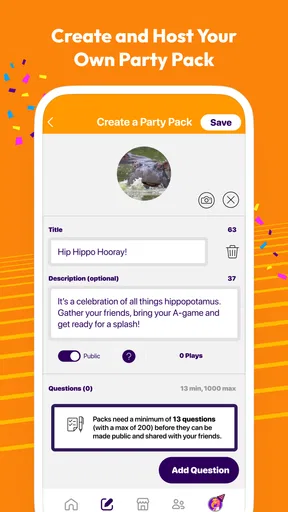
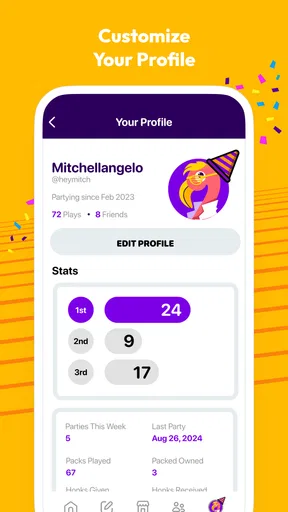
Our Review of Sporcle Party: Social Trivia
 Analysis by Appyee
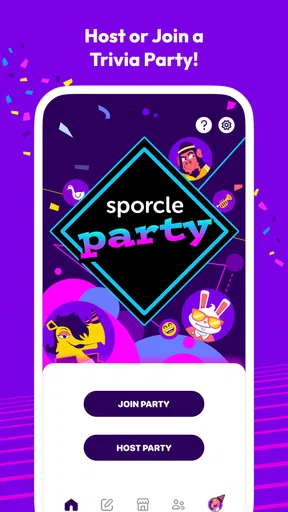
I approached Sporcle Party: Social Trivia as the kind of game you open when the room is full, nobody wants to learn complicated rules, and a little friendly competition sounds better than another passive evening. It is a free trivia game from Sporcle, Inc., built around playing with friends rather than treating quiz questions as a solitary test. That difference matters more than the word “trivia” might suggest.
After spending time with it, my view is fairly clear: this is most appealing when the people around you are the main reason to play. It can turn a short wait, a casual visit, or a relaxed night at home into a shared activity. It is less convincing if you want a deep single-player progression system, a carefully structured educational course, or a traditional board-game replacement with a large amount of strategy.
The game is free to download and is rated for Everyone 10+, which makes it relatively easy to suggest for mixed-age groups. It has reached over five million installs and holds a 4.2 average from around seventeen thousand ratings, so it is not an obscure experiment with no established audience. Still, popularity alone does not answer the important question: will it fit the way you and your friends actually like to play?
What to consider before choosing a social quiz game
The first decision is whether you want a game that creates conversation or one that mainly measures individual knowledge. In my experience, social trivia works best when the questions are only half the entertainment. The other half comes from arguing over an answer, laughing at an unexpected miss, or discovering that the person who knows every sports fact cannot identify a famous film.
That makes the group itself a major part of the experience. If your friends enjoy calling out answers, comparing confidence, and accepting that someone will occasionally make a spectacular guess, this format has a natural advantage. If your group becomes frustrated by different knowledge levels, a competitive quiz can feel less welcoming than a cooperative game.
I would also think about session length. Sporcle Party is easier to recommend for flexible, informal play than for a carefully planned game night in which everyone expects a long campaign. A trivia app can be excellent for filling ten or fifteen spare minutes, but it may not replace a substantial tabletop game when your group wants a full evening with evolving tactics and a strong sense of progression.
Another useful question is how much control you need. Some players want to choose a narrow subject, adjust every rule, and build a custom quiz for a particular audience. Others would rather press into a ready-made experience and let the questions provide the structure. The second type of player is more likely to appreciate this game immediately.
Why the group matters more than the individual score
A practical test is to imagine a normal evening rather than an ideal one. Suppose three friends are waiting for food at a casual restaurant. One is confident with geography, another follows entertainment news, and the third is good at general knowledge but dislikes complicated controls. A social trivia game can give all three a reason to participate, because each question offers a fresh chance to contribute.
That same situation also reveals a limitation. If one player dominates every subject, the game may become a performance by one person instead of a shared activity. I found that the best sessions come from groups willing to keep the mood light and avoid treating every answer as proof of intelligence. When the score becomes more important than the conversation, the format loses some of its charm.
For families, the Everyone 10+ rating is a useful starting point, but I would still pay attention to the people playing and the subjects appearing in a session. An age label can help you decide whether the app is broadly suitable; it does not guarantee that every question will match your household’s interests or knowledge.
Where Sporcle Party feels strongest
The clearest strength is accessibility. You do not need to explain a large rulebook before beginning a quiz. Trivia is familiar enough that most people understand the basic goal immediately, and the social framing gives hesitant players a reason to join instead of watching from the side.
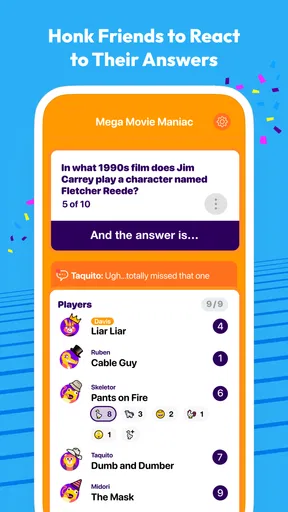
I also like the way a question-based game creates natural pauses for discussion. In a racing game, a player who is not holding the device can become an audience member. With trivia, everyone can think at the same time, share a guess, and react to the result. That makes it a better fit for groups where people want to talk while playing rather than concentrate silently.
The game’s free entry point helps with spontaneous use. You can suggest it without asking everyone to buy the same paid title first. That is especially helpful when friends have different phone habits or when you are introducing a game to people who rarely play mobile titles. The free model is not entirely frictionless, however, because optional in-app purchases range from ninety-nine cents to six dollars and ninety-nine cents per item. I would treat those purchases as optional convenience or support rather than part of the basic reason to install it.
One of the less obvious strengths of social trivia is its ability to expose the group’s knowledge patterns. After a few rounds, you start noticing who answers quickly, who waits for confirmation, and who is unexpectedly strong in a narrow area. That gives the game replay value beyond the individual questions. The entertainment becomes partly about learning how your friends think.
Small habits that make sessions better
My first practical tip is to decide the mood before starting. If you want a relaxed activity, agree that wrong answers are part of the fun and avoid turning the game into an interrogation. If everyone wants serious competition, establish that clearly too. This simple conversation prevents the common problem where one player expects a party and another expects a championship.
My second tip is to use it as a transition between activities rather than demanding that it carry an entire evening. It works well while people arrive, after dinner, during a break from a film, or when a planned activity ends earlier than expected. Short, repeatable sessions make trivia feel fresh; forcing it to fill every quiet moment can make even good questions feel repetitive.
A third useful approach is to balance confidence with participation. Encourage players to explain why they chose an answer, but do not let the fastest speaker answer on behalf of everyone. In a mixed-ability group, giving quieter players room to think makes the game more enjoyable and makes the final score more meaningful.
It is also worth treating the phone as a shared object rather than an individual screen whenever possible. Passing attention around the group keeps the social part visible. If everyone becomes absorbed in a private display, you lose the main advantage over a standard solo quiz app.
How it compares with familiar alternatives
Compared with a solo trivia app, Sporcle Party is better when the goal is shared reaction. A solo title may be preferable for commuting, private practice, or tracking personal improvement, because you can play at your own pace without coordinating with anyone else. I would choose that alternative when I want quiet concentration rather than conversation.
Compared with a physical trivia board game, this mobile option is easier to bring along and quicker to start. A board game can offer a stronger sense of occasion, visible components, and a more deliberate pace, but it also requires storage, setup, and someone to explain the rules. The app is the more convenient choice when the group is already holding phones and wants to begin immediately.
Compared with a live quiz night, it gives you more control over when to play and removes the pressure of performing in front of strangers. A pub quiz or organized event can feel more memorable because of the atmosphere and the larger audience, but it is less flexible. I would choose Sporcle Party for an unplanned gathering and a live event for a social occasion where the venue itself is part of the fun.
Compared with a party game based on drawing, acting, or bluffing, trivia favors people who enjoy recall and recognition. That can be a benefit for knowledge-focused groups, but it may be a weakness for players who express themselves better through creativity or improvisation. If your friends dislike fact-based competition, a charades-style game may create more laughter.
Who should skip it
I would not make this my first recommendation for someone seeking a serious learning tool. Answering questions can reveal gaps in knowledge, but that is not the same as receiving a structured lesson, detailed explanations, or a personal study plan. Students looking for focused revision should consider an educational app designed around their subject instead.
I would also look elsewhere if you mainly play alone. The social promise is central to the experience, and using it without an interested group can make the game feel less distinctive. A solo quiz platform with progress tracking or specialized topics may give you more satisfying long-term use.
Players who dislike uncertainty should think twice as well. Trivia naturally includes questions that feel too easy, too obscure, or outside a player’s interests. No general quiz can make every round feel perfectly balanced for every person. If your enjoyment depends on precise competitive fairness, a game with fixed roles and more predictable mechanics may be a better fit.
Finally, people who want a completely purchase-free experience should remember the optional item pricing. The game is free, but the presence of in-app purchases means you should be comfortable ignoring extras or setting a clear spending limit before handing the device to younger players.
Device fit, age, and practical expectations
The game supports devices running Android 6.0 or later, which covers a broad range of Android phones and tablets. The current version is 1.5.15, so I would keep the app updated when possible, particularly if you are preparing it for a group session. Nothing ruins a spontaneous game faster than discovering that one person needs to update while everyone else is ready.
The age rating of Everyone 10+ makes it a reasonable candidate for family use, casual gatherings, and older children playing with adults. I still recommend that an adult set expectations around purchases and competition. The most suitable audience is not defined only by age; it is made up of people who enjoy answering questions in public and can handle being wrong without taking it personally.
Because the game is free, the cost of trying it is low. The more important cost is social: you need willing players, a little shared attention, and enough patience to let everyone participate. That is why I would not install it simply because you enjoy trivia by yourself. Install it when you can picture a real group using it.
The cost of switching from another quiz option
If your friends already have a favorite trivia app, switching may not be necessary. Familiarity has value: people know the controls, understand the rhythm, and may already have a preferred way to compete. The case for trying Sporcle Party is strongest when your current option feels too solitary, too complicated, or too dependent on a particular event schedule.
The transition is relatively easy because the basic idea is recognizable. You do not need to persuade a group to learn an entirely new genre. What you may need to change is the way you organize the session. Instead of expecting one person to prepare questions or set up a board, decide who is hosting the phone, how turns or answers will be handled, and whether the aim is friendly participation or a serious contest.
There is also a social switching cost that is easy to overlook. If your group has different comfort levels with mobile games, the person most familiar with the app can accidentally become the manager rather than a player. I suggest rotating control when practical and explaining the flow in plain language. The more evenly the attention is shared, the more the game feels like a group activity instead of a demonstration.
For a family, I would try one short session before making it part of a regular routine. Watch whether younger players understand the questions, whether adults dominate, and whether everyone enjoys the pace. For a group of friends, I would test it during a low-pressure gathering rather than presenting it as the main event. That gives you a fair sense of its social fit without asking the game to prove too much.
My recommendation after using it
Sporcle Party is worth installing when your priority is easy, shared trivia rather than deep progression. I recommend it to friends who want a quick activity that can include several people, start without much explanation, and generate conversation even when the scores are uneven. The free download makes experimentation sensible, and the established audience suggests that it has found a real place among mobile quiz games.
I would be more cautious with players who want a solo challenge, a structured study experience, or a highly strategic party game. For those needs, a focused alternative will probably serve you better. I also would not spend on optional items until you have confirmed that your group actually enjoys the basic sessions; the free experience is the right way to judge the fit first.
My final advice is to choose the app based on the people beside you, not just your personal interest in trivia. With the right group, an ordinary phone becomes a prompt for jokes, debates, and surprising discoveries about one another. With the wrong group, it is simply another quiz competing for attention. That distinction is the whole decision, and it is why I see this game as a strong social option rather than a universal trivia recommendation.
Verdict
Strengths of Sporcle Party: Social Trivia
- Thousands of trivia quizzes cover a wide range of interests.
- Multiplayer format makes it easy to compete with friends.
- Short rounds keep games fast and engaging.
- Regularly updated content helps keep the quiz library fresh.
- Simple controls make it accessible for casual players.
Limitations of Sporcle Party: Social Trivia
- Some quizzes may feel repetitive after extended play sessions.
- Question difficulty can vary significantly between categories.
- A stable internet connection is required for most features.
- Competitive play may be less enjoyable with uneven skill levels.
- Some content or features may require in-app purchases.
Other Releases by Sporcle, Inc
View All
Sporcle : Play Trivia Quizzes
Trivia4.4
Similar Picks in This Category
View All
Millionaire 2026 Quiz & Trivia
Quiz & Trivia Games by Submarine Apps4.5

Brain Test 2: Tricky Stories
Unico Studio4.7

Trivia Crack: Brain Quiz Games
etermax4.4

QuizzLand. Quiz & Trivia game
Quiz & Trivia Games by Mno Go Apps4.8

Brain Test: Tricky Puzzles
Unico Studio4.7

Logo Quiz
bubble quiz games4.5
Frequently Asked Questions
What is Sporcle Party: Social Trivia?
Sporcle Party: Social Trivia is a multiplayer quiz game built around quick, competitive trivia rounds. It lets players test their knowledge across different subjects, either by joining friends or competing with other participants. Questions can cover entertainment, history, sports, geography, science, and more, making each session feel varied and suitable for casual parties or regular quiz fans.
Can I play Sporcle Party: Social Trivia with friends?
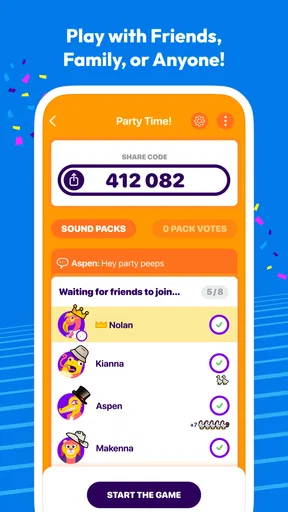
Yes. The game is designed primarily for social play, so you can invite friends or join a shared game and compete in the same trivia session. It works well for groups because everyone answers questions and compares results as the rounds progress. Before downloading, remember that a stable internet connection and access to the relevant multiplayer features may be required.
Is Sporcle Party: Social Trivia free to download and play?
Sporcle Party: Social Trivia can generally be downloaded without an upfront purchase, but availability of optional purchases, advertisements, or premium features may depend on the platform and current version. The free experience provides access to the core trivia gameplay, while some additional content or conveniences may require payment. Check the store listing for the latest pricing details.
What topics and quiz categories are available in the game?
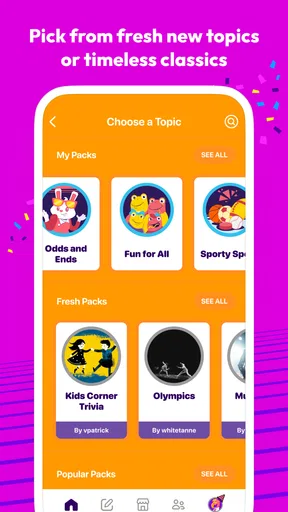
The game draws from Sporcle’s broad trivia catalog, so players can expect categories such as movies, television, music, sports, history, geography, science, literature, and general knowledge. The exact selection may change as new quizzes and events are added. This variety is one of the game’s strongest points, although difficulty can differ considerably between categories and individual question sets.
Does Sporcle Party: Social Trivia require an internet connection?
An internet connection is normally needed because Sporcle Party: Social Trivia focuses on online quizzes, multiplayer sessions, account-related features, and updated content. Playing over Wi-Fi or a reliable mobile connection should provide the smoothest experience, particularly when several people are participating. If you are looking for a fully offline trivia game, this title may not meet your expectations.
Play our best games!


